Begin event planning while the course is still flexible. Once tees and paths are fixed, it becomes harder to find space for check-in, briefing, supplies, queues and emergency access without creating new conflicts. Walk the site from the likely arrival point. Follow a participant from parking or drop-off to registration, practice, starting position, course, finish and departure. Repeat the walk for volunteers, maintenance staff and visitors who are not taking part.
Write down the event assumptions: approximate attendance, format, start pattern, expected duration, public access, vehicle needs and the space available for staging. These are planning inputs, not claims about a particular event’s eligibility or sanctioning. Competition rules and local requirements can change; verify them with the appropriate governing body, land manager and authorities for the event in question.
Put arrival and orientation first
People arrive with different levels of familiarity. A first-time participant should be able to find the correct entrance, know where to check in and understand where to wait without wandering into active play. Use clear signs at decision points and make event information available before arrival. If parking is limited, communicate a practical arrival plan and identify who will manage overflow or drop-off. Keep vehicle movement separate from pedestrian gathering as far as the site permits.
Check the arrival experience at the time the event will take place. A narrow entrance may work at a quiet hour but become congested when several groups arrive together. Consider queues, weather protection, toilets, water, waste and the needs of people accompanying participants. The point is not to add infrastructure indiscriminately. It is to identify the actual service needs and make realistic arrangements with the venue.
Give staging enough space
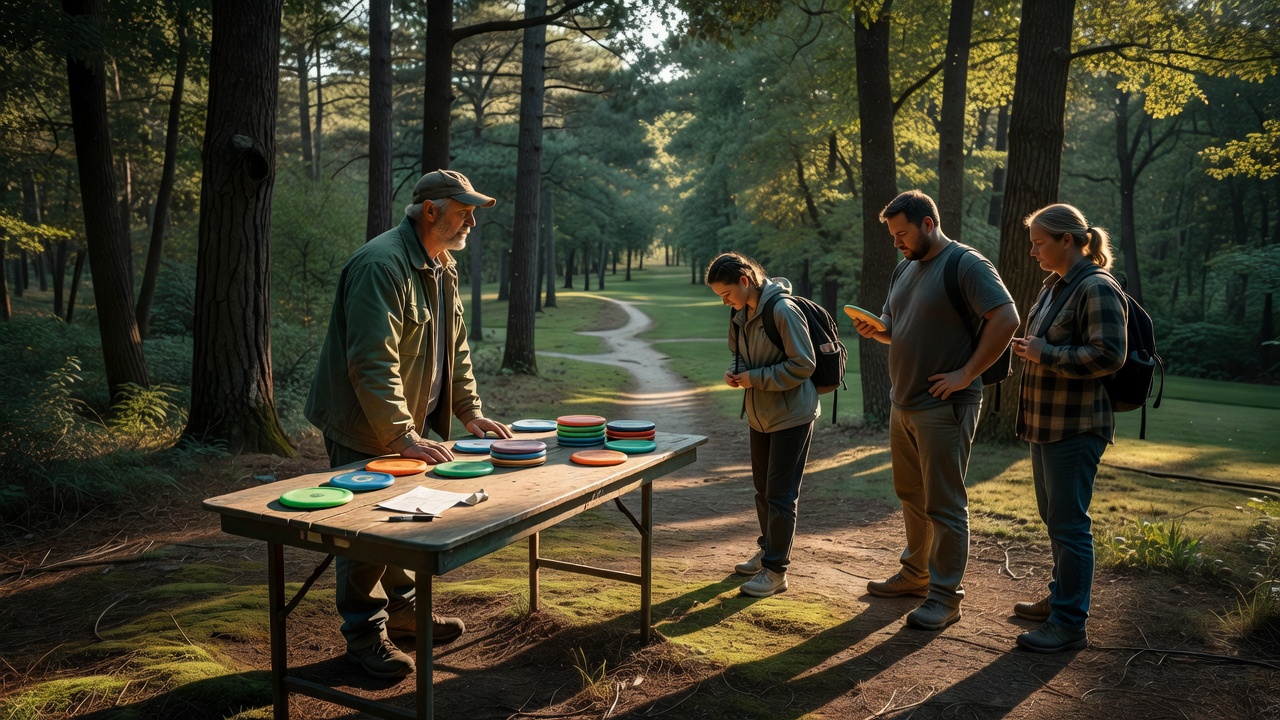
Staging includes check-in, briefing, equipment, volunteer coordination and any player gathering area. Choose a location that does not block public paths, emergency access or routine venue operations. Keep event signs visible without turning every junction into an instruction board. Where the course begins close to other activity, define a clear boundary between waiting participants and people playing or walking through.
Estimate the space needed by observing how groups actually gather. A compact table can create a queue that blocks a path; a large assembly area can place people near an active fairway. Consider shade, rain, wind and the ground’s ability to handle repeated foot traffic. Have a wet-weather alternative that has been discussed with the landowner rather than improvised on the morning.
Check circulation beyond the course map
Player flow on event day differs from a casual round. Groups may wait, move in waves, gather at scoring locations and return to a central area. Map those movements alongside the normal route. Look for choke points at bridges, narrow paths, shared crossings and tee areas with little room to wait. Decide how signs and volunteers will help at locations where players could turn toward the wrong hole or enter another group’s landing area.
Keep non-participant use in view. A tournament may bring more people to a park without closing it. Discuss the schedule, course boundaries and temporary management measures with the land manager. If a route conflict cannot be managed safely, reconsider the event layout or operating plan. A warning sign is only one measure and cannot solve an unsuitable location or an unclear crossing by itself.
The event plan should fit the place on its busiest plausible day, not only on a quiet practice round.Tournament fieldnote
Prepare a practical operations sheet
Make a concise run sheet with roles, locations, communication methods, setup sequence and decision points. Name a person responsible for each task. Include site opening, signs, check-in, briefing, start procedure, course checks, facilities, incident response, teardown and a final sweep. Add a contact path for venue staff and emergency services, using verified local details in the operational document. Avoid placing sensitive personal information on public-facing signs.
Plan what happens if weather, a blocked path, a damaged feature or a lost participant affects play. The exact response depends on the venue, the event and applicable rules. Agree who can pause or alter operations, how participants will be informed and where people should go. Keep the response practical enough to use under pressure and review it with the relevant venue staff before event day.
Run sheet for a site review
- Before setupConfirm access, permissions, contacts, forecast review and any venue restrictions with the responsible parties.
- Set the sitePlace agreed signs, protect public routes, check staging and confirm that emergency access remains clear.
- Orient participantsExplain the format, route, key boundaries, facilities, communication method and where to seek help.
- Monitor playAssign people to known bottlenecks and check shared-use areas without obstructing ordinary visitors.
- Close and restoreRemove temporary materials, inspect the site, report damage and return spaces to their agreed condition.
Distinguish design judgement from requirements
A course designer can advise on route clarity, spatial conflicts, staging possibilities and the physical relationship between holes. Organisers must separately verify the competition format and applicable rules, permissions, insurance, safeguarding, accessibility arrangements, food or trading conditions and local event requirements. These questions may involve governing bodies, landowners, councils, insurers or other qualified advisers. Do not treat a design note or a sample checklist as proof of compliance.
Keep a small requirements register with the question, responsible person, source to verify and review date. Mark unresolved items rather than assuming they will take care of themselves. When a rule or venue condition is confirmed, note the current source and the version or date. This is especially useful when the same site hosts different formats or changes management over time.
Design for reset, not just opening
After the last card is complete, the site still needs attention. Plan how signs, temporary ropes, bins and staging materials will be removed. Walk the course for litter, damage, trampled ground and misplaced equipment. Ask venue staff what they need returned, and record any maintenance follow-up while the details are fresh. A tidy reset protects the relationship with the landowner and helps future organisers understand what worked.
Hold a short review with organisers, volunteers and venue representatives. Note where players became uncertain, where lines formed, what ordinary users experienced and which facilities were under- or over-used. Separate observations from proposed solutions. A difficult queue might need a different schedule, a wider waiting area or clearer pre-event instructions; each should be tested against the site before being adopted.
Make operations part of the design conversation
The course and event plan should inform each other. A routing change may reduce a crossing but affect walking distance; a staging site may be convenient yet conflict with an existing community use. Bring those trade-offs into the open early. A clear plan acknowledges who benefits, who carries the extra work and what evidence would change the decision.
Good tournament planning is not about making every event feel identical. It is about understanding the place and setting up a predictable, considerate day for the people using it. The final basket is one point in a larger journey that includes arrival, play, gathering and departure. Design the whole journey, verify the requirements that apply and leave the site ready for its next ordinary day.